


As announced in the recent budget, from Apr 2025 Double-Cab pick up trucks like Ford Ranger Wildtraks, Mitsubishi L200s, Nissan Navaras. This change will impact businesses and employees alike, bringing shifts in tax treatment, benefits, and financial planning. Here’s a closer look at how these rules will affect double-cab pickups, especially for small businesses and individuals using these vehicles for work and personal use.
1. Increased Benefit-in-Kind (BIK) Rates – how it impacts the employee of a company
One of the most notable changes is how BIK rates will apply to double-cab pickups. Previously, these vehicles benefited from more favorable BIK tax rates due to being classified as commercial vehicles. From April 2025, however, they’ll be treated as cars for tax purposes. This will almost definitely mean that if you use the truck for any personal use then your tax will take a hike. The size of this hike will depend on the value of the truck (when it was new) and the emissions.
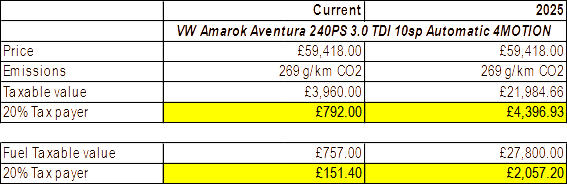
Here’s an example based on a VW Amarok – there is a £3,600 hike in the annual benefit in kind tax from 2025 and an additional £1,900 in tax if the business paid for your personal fuel too:
2. Adjustments to Capital Allowances – how it impacts the business
Currently, double-cab pickups receive 100% capital allowances (tax relief) designed for commercial vehicles. From April 2025, the capital allowance treatment for these pickups will align with that for cars based on emissions and will reduce the tax relief for businesses. Furthermore, since VAT on cars is blocked (unless it’s a taxi or learner driver vehicle) then you can’t reclaim the VAT either!
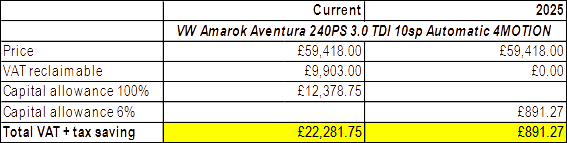
Using the same example above, the business which currently enjoys a £22,300 tax relief on the Amarok will end up only receiving only £891 tax relief (year 1) as it loses out £9,900 in VAT plus £11,500 in corporation tax savings:
3. What if I already have a double-cab pick up?
If you already bought a double-cab pick up before 5th April 2025 then there are transitional rules that apply to you:
You can still use the current capital allowance rules and treat it as a commercial vehicle up to the earlier of:
- Date you sell the truck
- Date your lease ends if leased
- 5th April 2029
Need Help Navigating These Changes?
With the tax landscape for vehicles shifting, professional guidance is essential. Contact us at LeeP Accountants to discuss the impact of these changes and find the best strategies for your business as there are other options too!